Launch offer — valid today only

📄 Digital book in PDF · read it on your phone or print it

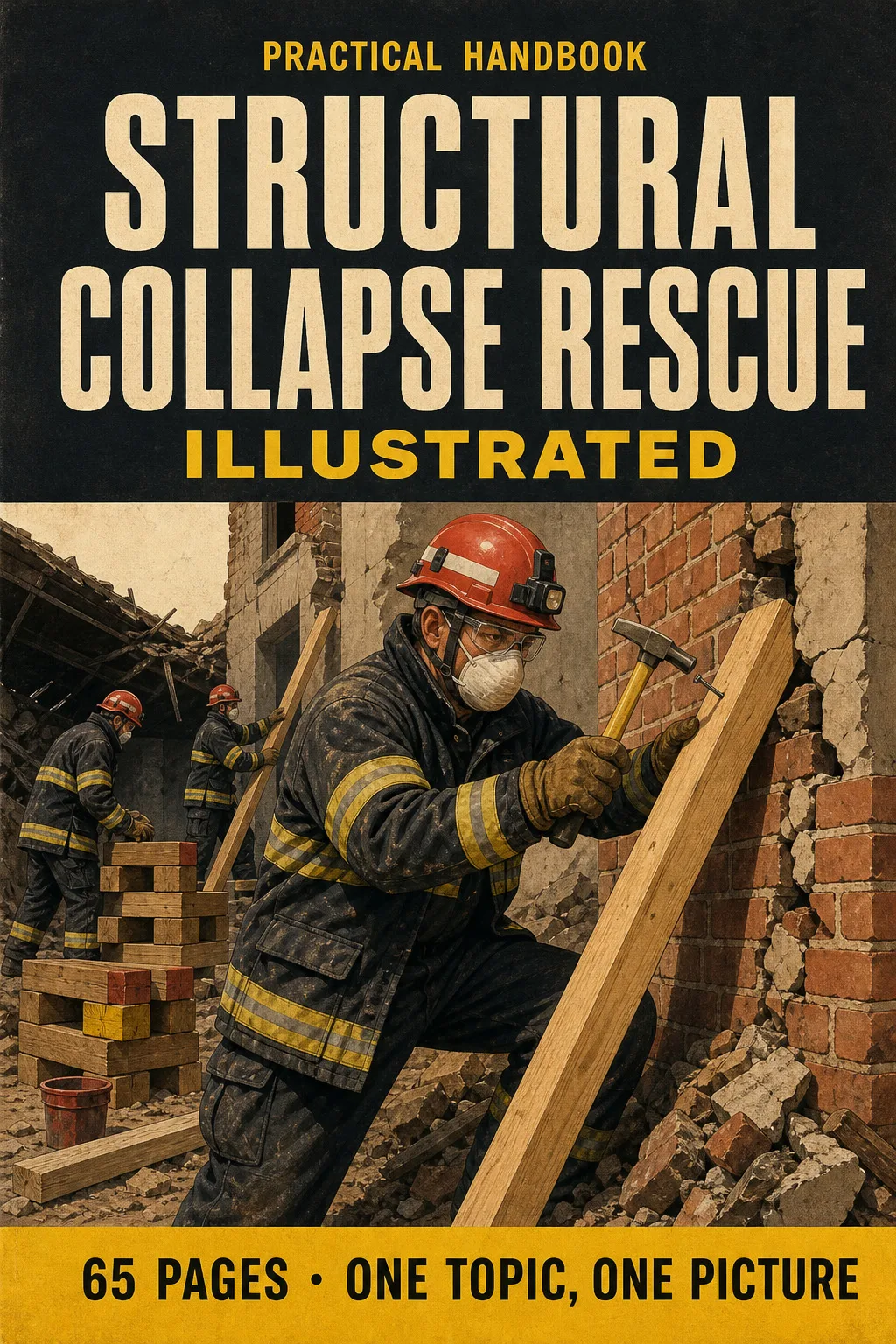
Structural Collapse Rescue in Drawings Read the Building in 5 Steps, Then Pick the Shore

Read the damaged building, find the void, build the shore. 65 pages, one topic each: the drawing first, then the numbers and steps to remember. PDF by email, printable for the station. 65 illustrated pages.

START STUDYING THIS WAY

🔒 Secure checkout · PDF by email · 30-day guarantee

Every topic, its own pageEvery building read in the same 5 steps: type, pattern, voids, hazards, shore. Each one drawn, with the numbers beside it
65 illustrated pages65 illustrated pages in 9 parts, from size-up to test night
Up-to-date sourcesNFPA 1006, FEMA US&R Structural Collapse Technician materials and the USACE Shoring Operations Guide
PDF by emailFormat

Look Inside the Book

Every page has one big drawing and a box with the numbers, angles and steps you need to know:

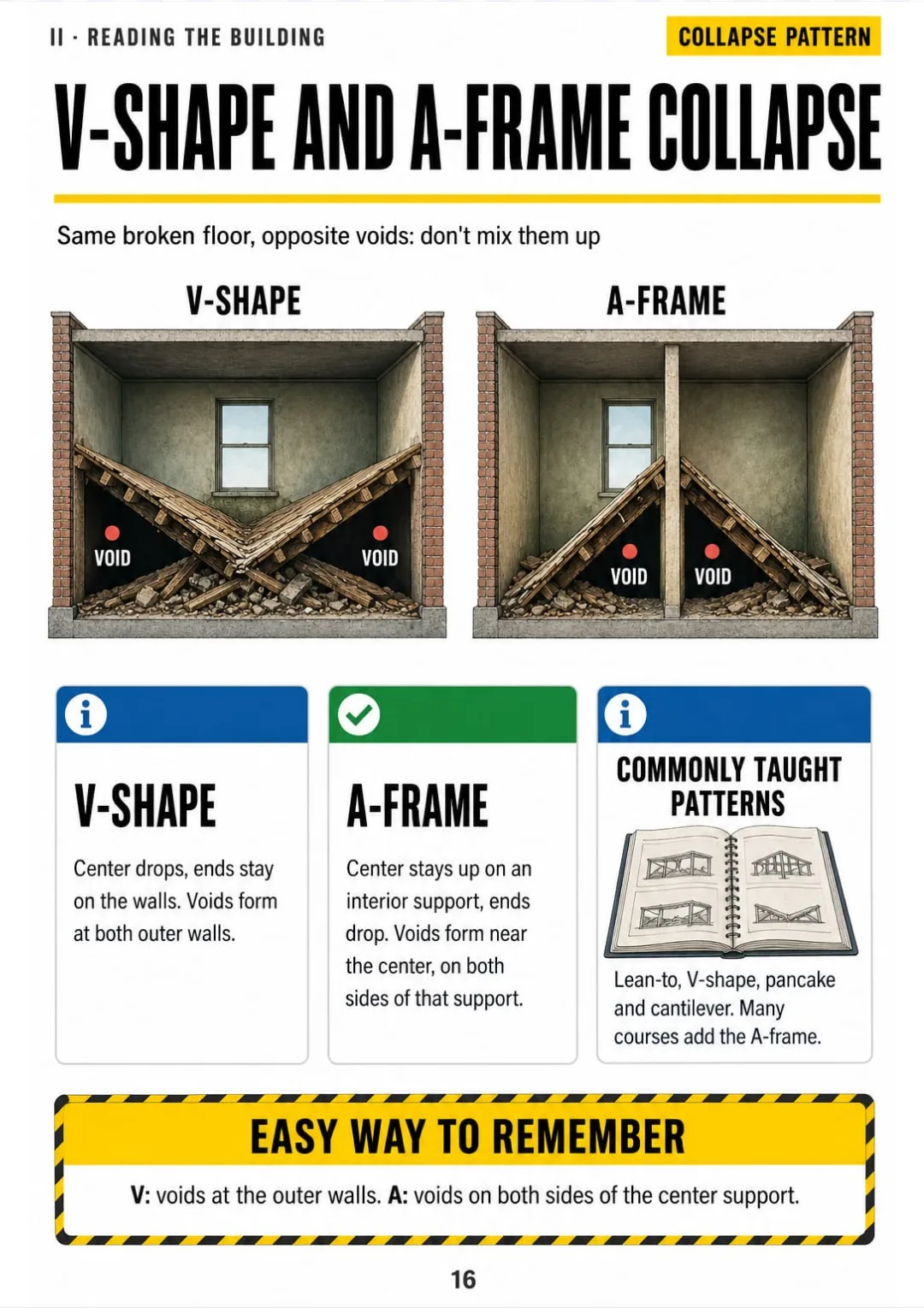
V-shape vs A-frame: voids at both walls, or voids on both sides of the center support.
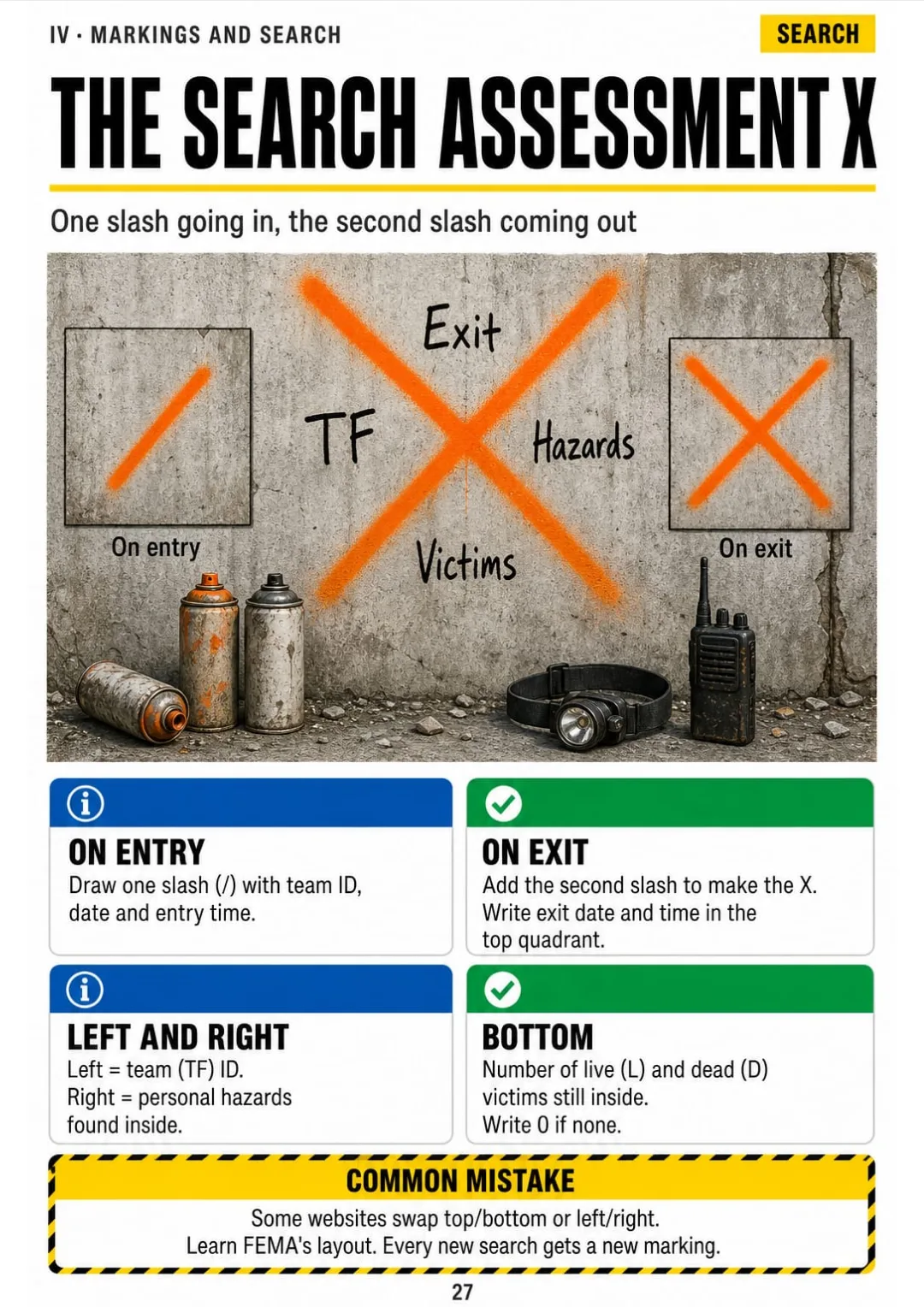
X quadrants: left = TF ID, top = time out, right = hazards, bottom = L/D still inside
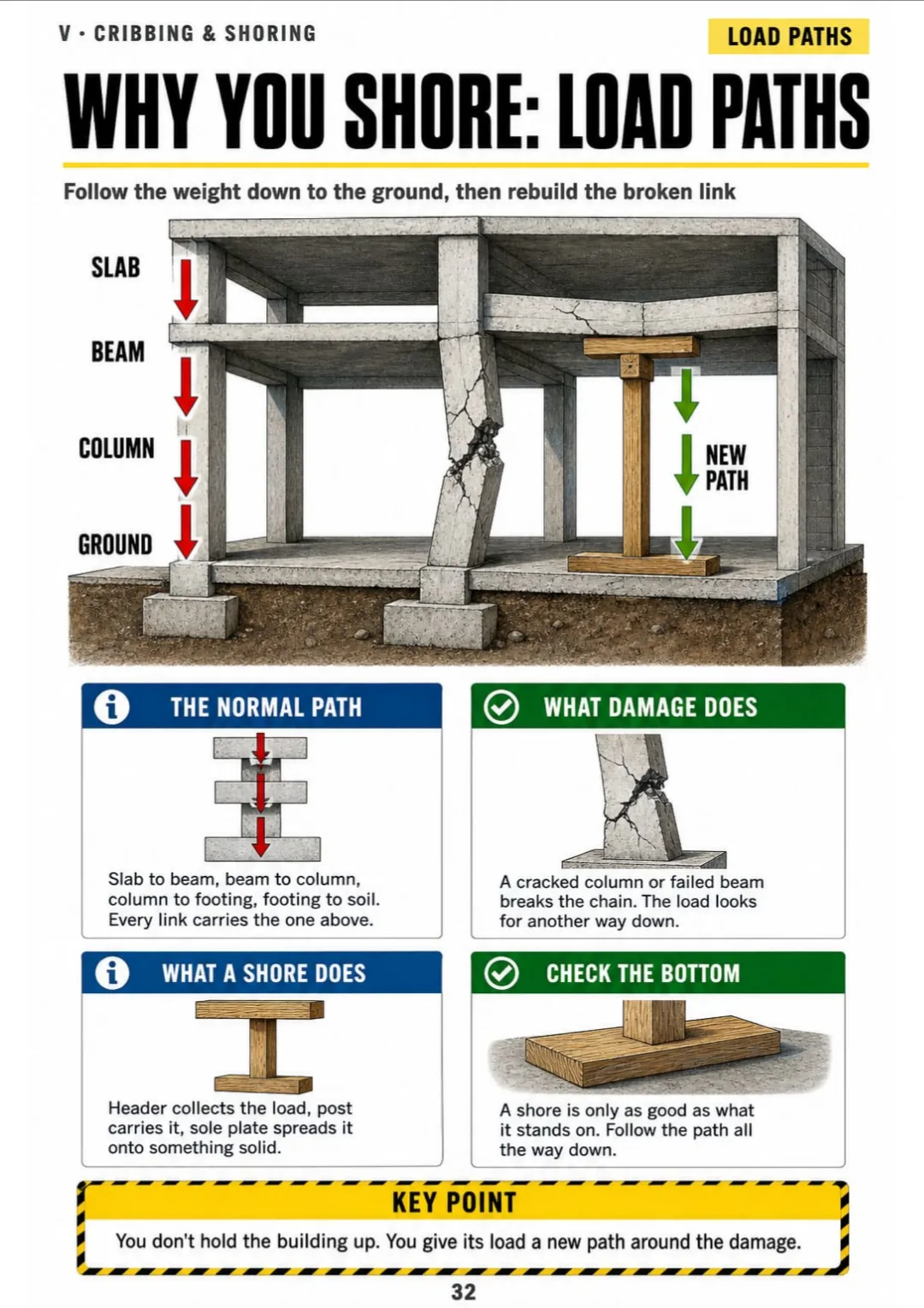
Slab → beam → column → ground: the shore rebuilds the broken link.
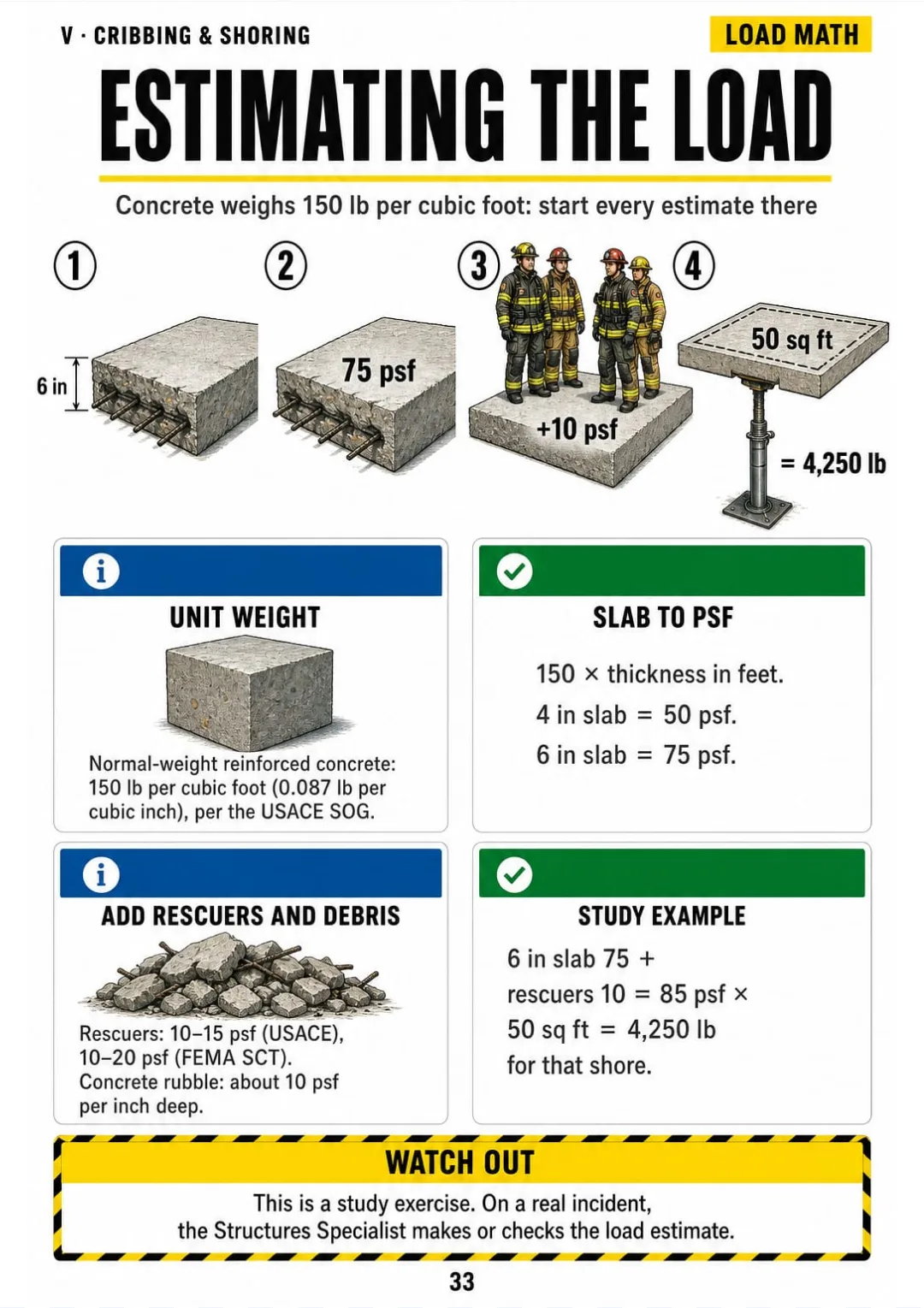
6 in concrete slab = 75 psf. Add 10–20 psf for rescuers, 10 psf per inch of rubble.
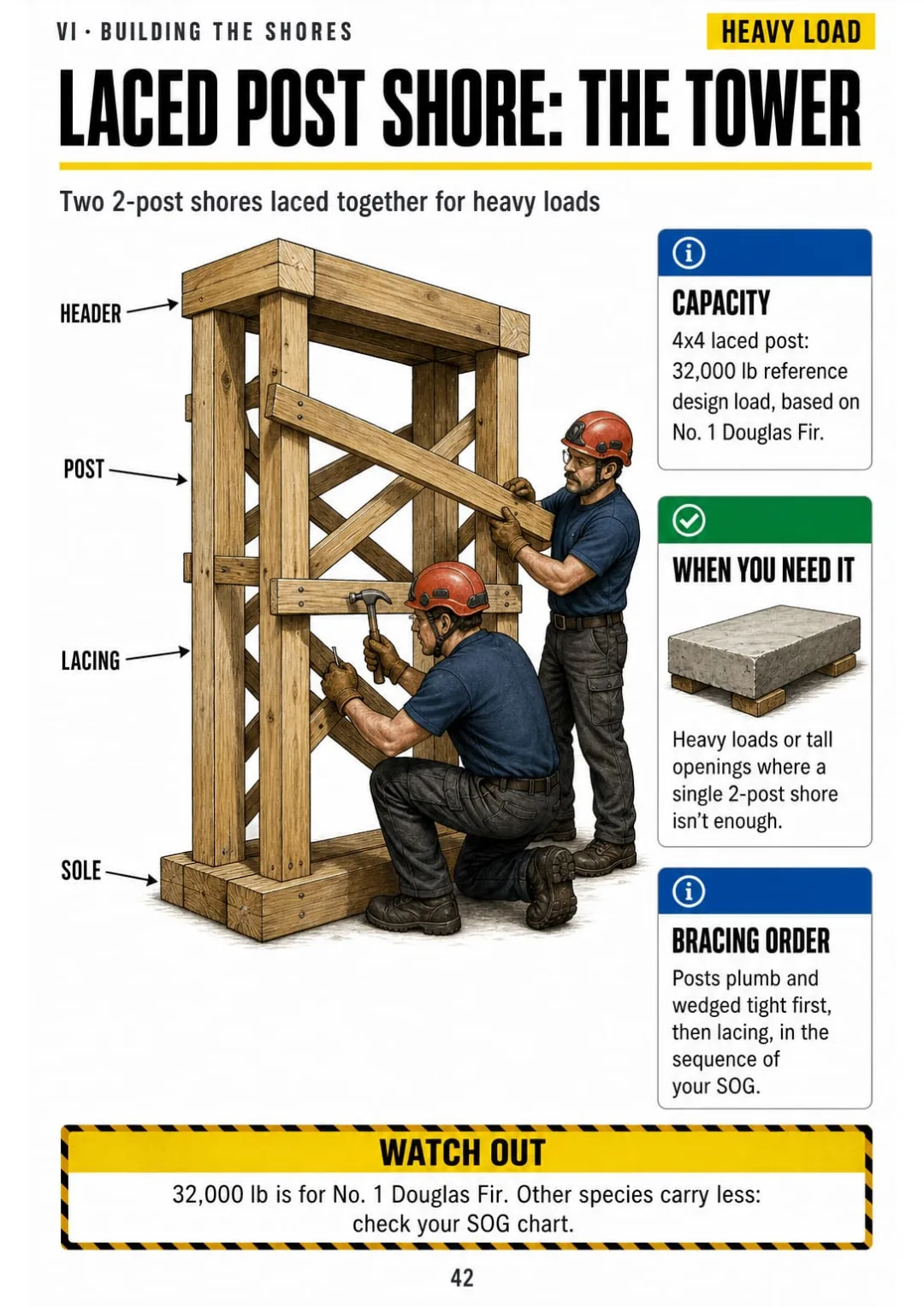
Laced post shore: 4x4 tower, 32,000 lb reference design load.
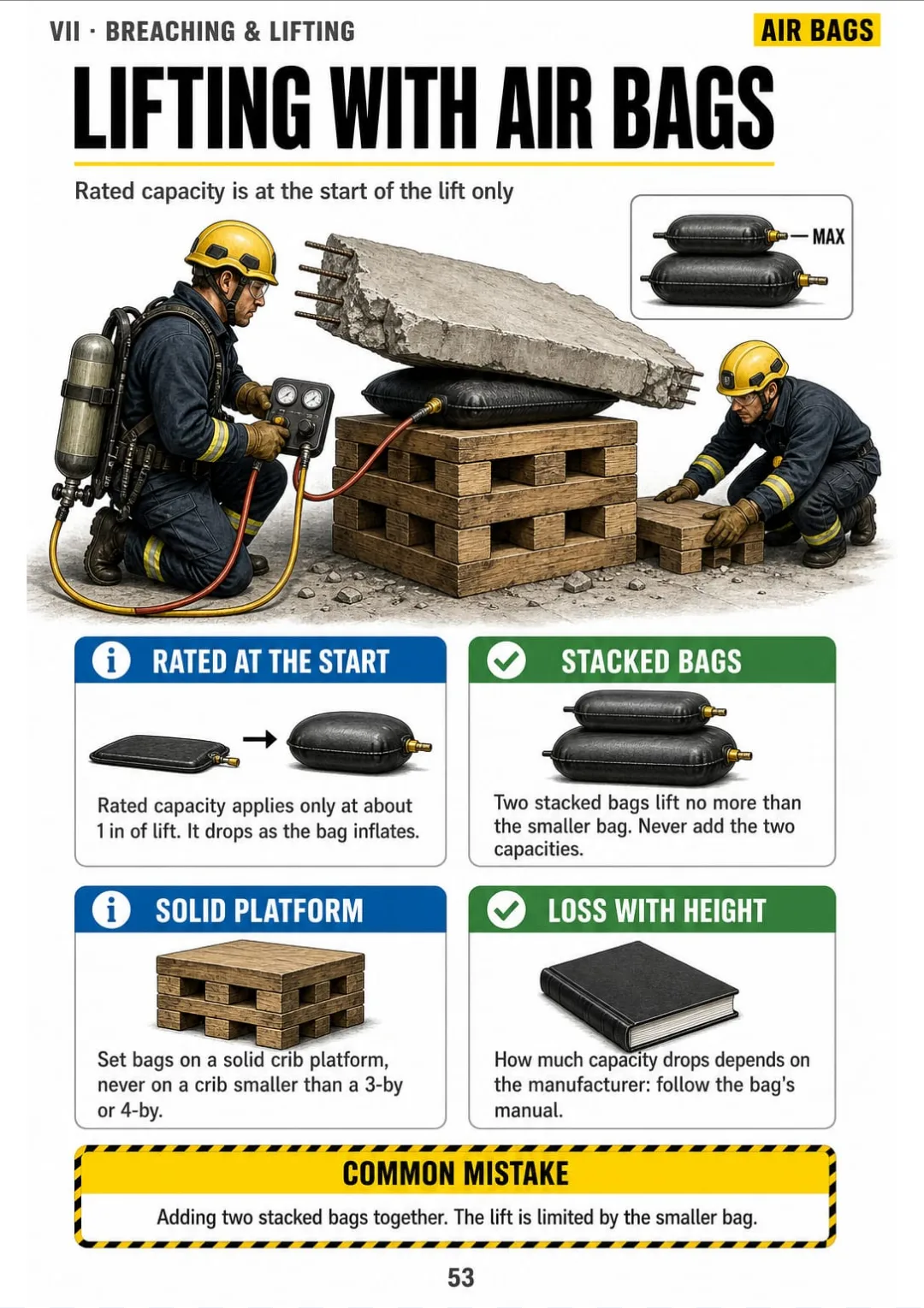
Rated capacity only at about 1 in; two stacked bags lift as the smaller one
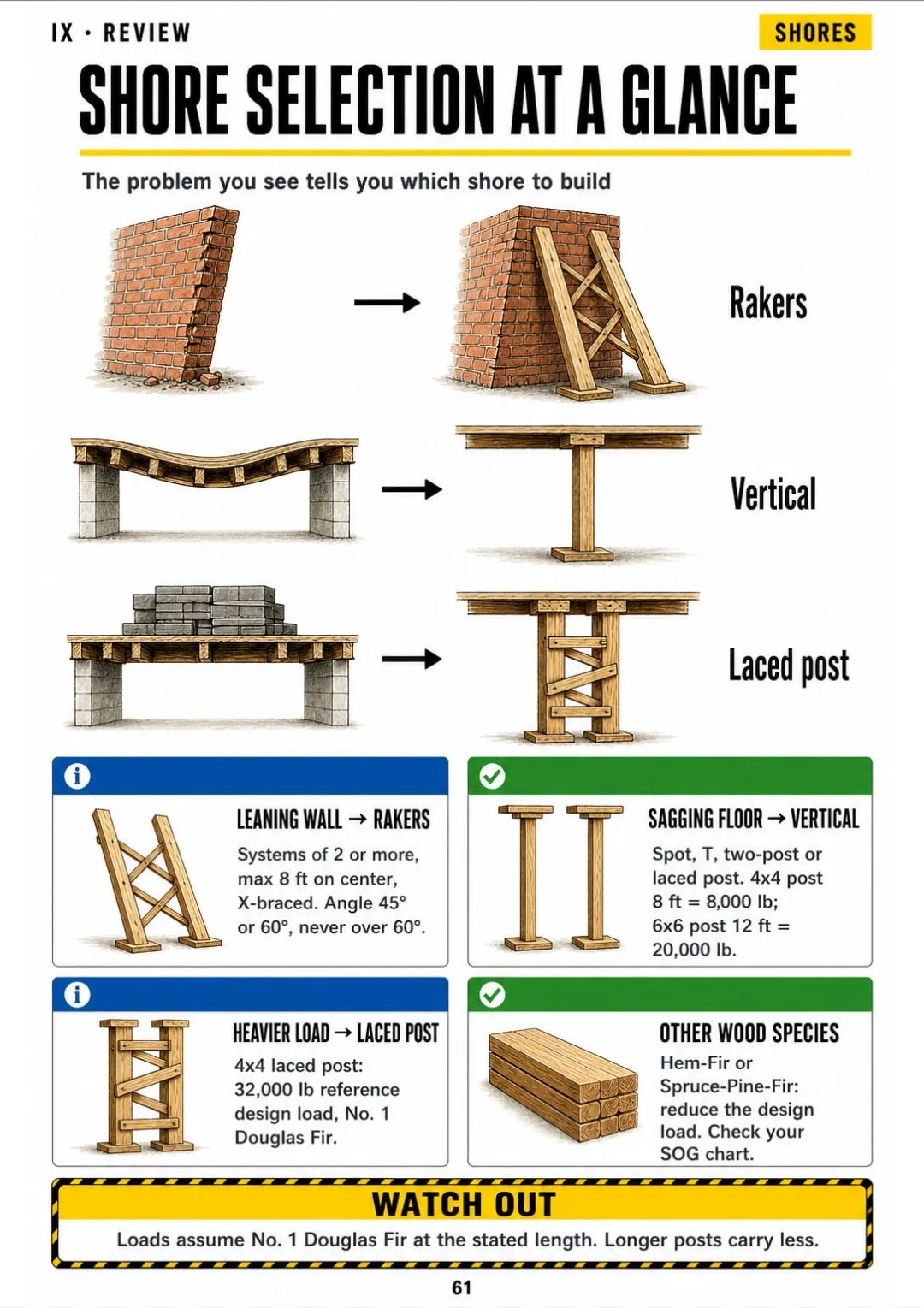
Leaning wall → raker · sagging floor → vertical shore · opening → window/door shore · slope → sloped floor shore.
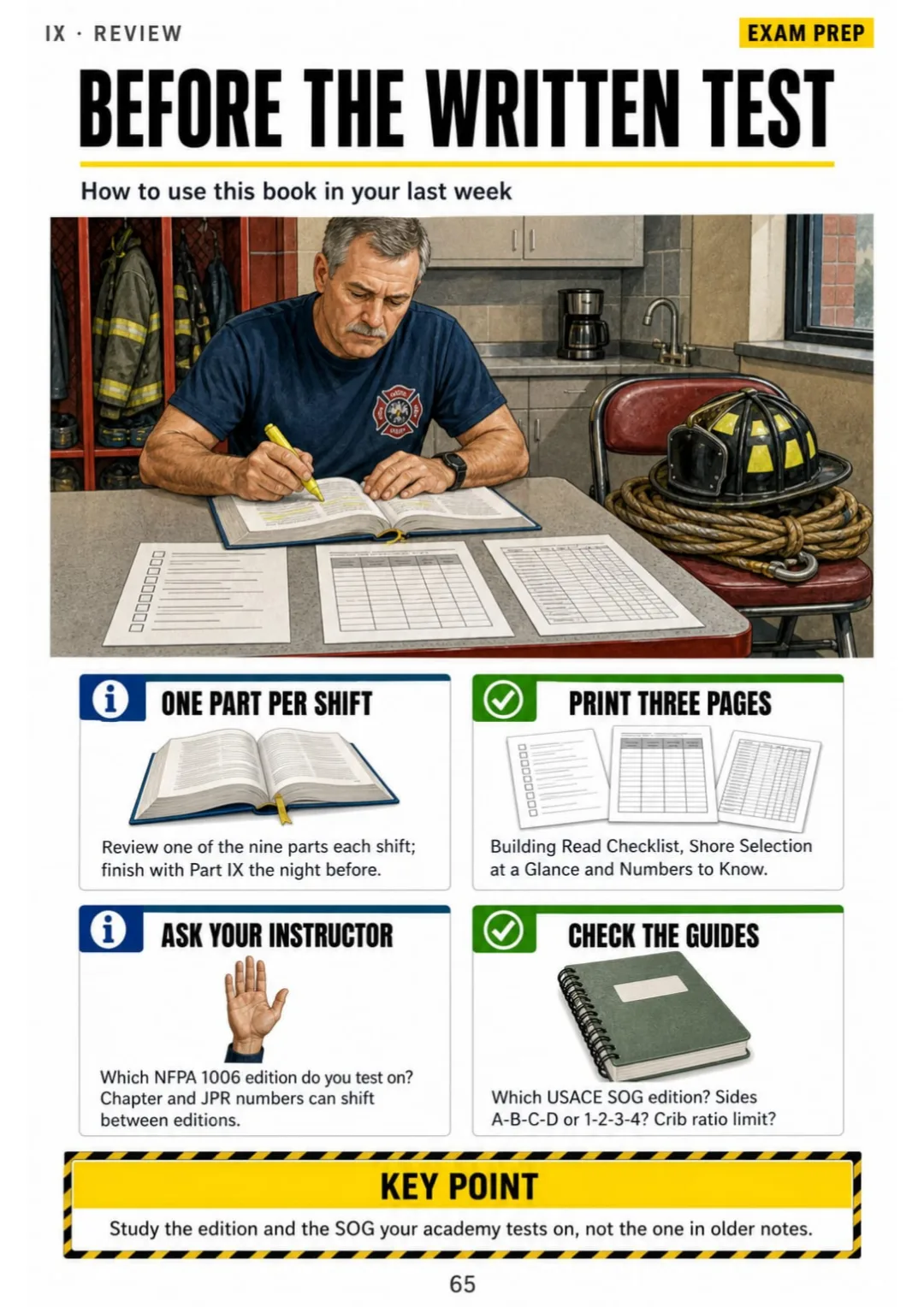
One part per shift, three pages to print, and four questions for your instructor.

Swipe to see more →

These are real pages from the book. The table of contents is the full one: 9 parts and 61 topics.

The Problem Isn't You. It's How It Was Explained.

You're standing next to a 6-inch concrete slab on the training pile, and the instructor asks: how many pounds per square foot is that shore going to carry?

You read the load chapter. But the manual gives it to you in paragraphs: unit weights, live loads and debris allowances mixed into one block. On the spot, the numbers don't come back in order.

Slab → beam → column → ground: the shore rebuilds the broken link.

In the book, that slab is one page. It's drawn in section, 6 inches thick, with 75 psf written right on it, then the rescuer live load and the rubble on top, each number with its source.

The same goes for the V-shape collapse, the search X, shore components, the solid sole raker and sling angles: each one has its own page.

You add the load up in your head, pick the shore and give your answer, without flipping back through the manual.

COMPARE FOR YOURSELF

Same Topic, Two Ways to Study It

THIS
  • The manual: line after line after line
  • Search markings explained only in words
  • You show up to the practical with doubts
Upon completion of the search of a structure or a portion thereof, the search team shall apply a search assessment marking adjacent to the point of entry. The marking consists of a large X drawn with orange spray paint. Information shall be recorded in each of the four quadrants: the left quadrant shall contain the team identifier; the top quadrant, the date and time of departure; the right quadrant, the personal hazards identified; and the bottom quadrant, the number of live and deceased victims remaining.
FOR THIS
  • The search X in one drawing
  • Each quadrant in its own labeled box
  • You see it and you get it
X quadrants: left = TF ID, top = time out, right = hazards, bottom = L/D still inside
CONTENTS

Take a Look at the 9 Parts and 61 Topics

The job and the standard, reading the building, size-up and hazards, markings and search, cribbing and shoring basics, building the shores, breaching and lifting, moving loads and a final review: 65 pages, all illustrated

IThe Job and the Standard · pp. 5-9
  1. What NFPA 1006 Asks of a Collapse Technician
  2. The 5 Stages of Collapse Rescue
  3. Where You Fit in the Command Structure
  4. The Read-the-Building Sequence
  5. Lumber, Tools and Units You'll Use
IIReading the Building · pp. 10-17
  1. The 4 FEMA Construction Categories
  2. Light Frame: Wood Buildings
  3. Heavy Wall: URM and Tilt-Up
  4. Heavy Floor: Concrete Frame
  5. Precast Concrete
  6. Lean-To Collapse
  7. V-Shape and A-Frame Collapse
  8. Pancake and Cantilever Collapse
IIISize-Up, Hazards and Safety · pp. 18-24
  1. The 360 Size-Up
  2. Signs of Secondary Collapse
  3. Collapse and Hazard Zones
  4. Utilities: Gas, Electric, Water
  5. Monitoring the Building
  6. Air, Dust and Confined Spaces
  7. Evacuation and Signal Horns
IVMarkings and Search · pp. 25-31
  1. The Structure Marking Box
  2. Structure Identification: Sides and Quadrants
  3. The Search Assessment Marking
  4. Victim Location Marking
  5. Hailing and Physical Void Search
  6. Technical Search: Cameras and Listening Devices
  7. From Located to Accessed
VCribbing and Shoring Basics · pp. 32-38
  1. Why You Shore: Load Paths
  2. Estimating the Load
  3. Wedges and Shims
  4. Box Cribbing
  5. Crib Variations
  6. Shore Components
  7. Measuring and Cutting for a Shore
VIBuilding the Shores · pp. 39-47
  1. Spot Shore
  2. T-Spot and Double-T Shores
  3. Two-Post Vertical Shore
  4. Laced Post Shore
  5. Window Shore
  6. Door Shore
  7. Solid Sole Raker
  8. Split Sole and Flying Raker
  9. Sloped Floor Shore
VIIBreaching, Cutting and Lifting · pp. 48-55
  1. Breaching Concrete: The Triangle Pattern
  2. Clean vs Dirty Breach
  3. Cutting Rebar and Steel
  4. Breaching Masonry and Wood Walls
  5. Levers and Mechanical Advantage
  6. Lifting with Air Bags
  7. Finding the Center of Gravity
  8. Slings, Angles and Rigging
VIIIMoving Loads and Removing Debris · pp. 56-59
  1. Moving Loads with Rollers and Pipes
  2. Using Cranes and Heavy Equipment
  3. Selected Debris Removal
  4. Packaging and Removing the Victim
IXReview and Common Mistakes · pp. 60-65
  1. Building Read Checklist
  2. Shore Selection at a Glance
  3. Numbers to Know
  4. Frequent Size-Up and Marking Mistakes
  5. Frequent Cribbing and Shoring Mistakes
  6. Before the Written Test and the Practical

One Page, One Topic, All Clear

Think of it this way:

Drill night. The training officer points at a leaning brick wall and gives you two minutes to say which shore, at what angle and how far apart.

You open the book to the solid sole raker. The raker is drawn at 45° and 60°, with the spacing written on the drawing, and the build always goes in the same order: lumber list, cuts, placement, nail pattern.

Laced post shore: 4x4 tower, 32,000 lb reference design load.

Turn the page and the flying raker, the box crib and the search X follow the same layout: drawing on top, numbers in the box.

Structural Collapse Rescue Illustrated is 9 parts and 65 pages, all drawn, with a building-read checklist, a shore selection chart and the numbers to know at the end.

What you see drawn, you don't have to memorize.

What's Inside Structural Collapse Rescue Illustrated:

Ipp. 5-9

The Job and the Standard

What NFPA 1006 asks of a collapse technician, the 5 stages of collapse rescue, your place in the command structure, the read-the-building sequence, and the lumber, tools and units you'll use

IIpp. 10-17

Reading the Building

The 4 FEMA construction categories (light frame, heavy wall, heavy floor, precast) and the 5 collapse patterns (lean-to, V-shape, A-frame, pancake, cantilever), each drawn with its voids marked, so you know where to search before you go in

IIIpp. 18-24

Size-Up, Hazards and Safety

The 360 size-up, signs of secondary collapse, collapse and hazard zones, utilities, building monitoring, air and dust, and the evacuation signals

IVpp. 25-31

Markings and Search

The structure marking box, sides and quadrants, the search assessment X, victim location marking, hailing and void search, cameras and listening devices

Vpp. 32-38

Cribbing and Shoring Basics

Load paths, estimating the load, wedges and shims, box cribbing and its variations, shore components and how to measure and cut

VIpp. 39-47

Building the Shores

Spot, T-spot and double-T shores, two-post vertical, laced post, window and door shores, solid sole, split sole and flying rakers, and the sloped floor shore: each one drawn with its parts and measurements, so you can review a build without opening the binder

VIIpp. 48-55

Breaching, Cutting and Lifting

The triangle breach pattern, clean vs dirty breach, cutting rebar and steel, masonry and wood walls, levers, air bags, center of gravity and sling angles

VIIIpp. 56-59

Moving Loads and Removing Debris

Rollers and pipes, working with cranes and heavy equipment, selected debris removal, and packaging and removing the victim

IXpp. 60-65

Review and Common Mistakes

The building-read checklist, shore selection at a glance, the numbers to know, the most frequent size-up, marking and shoring mistakes, and the night before the test

At the end of the book: A building-read checklist, a shore selection chart and the numbers to know on one page.
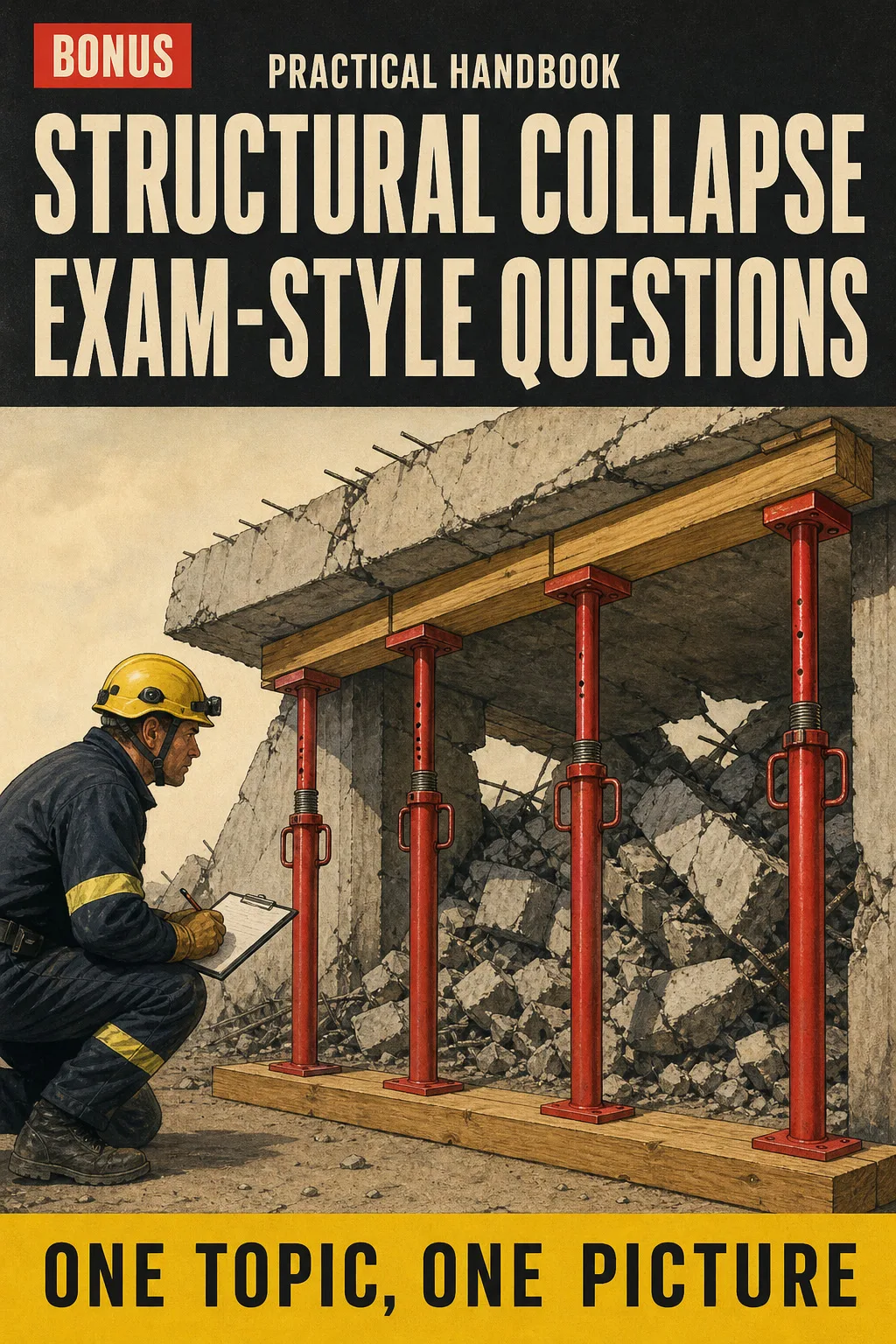
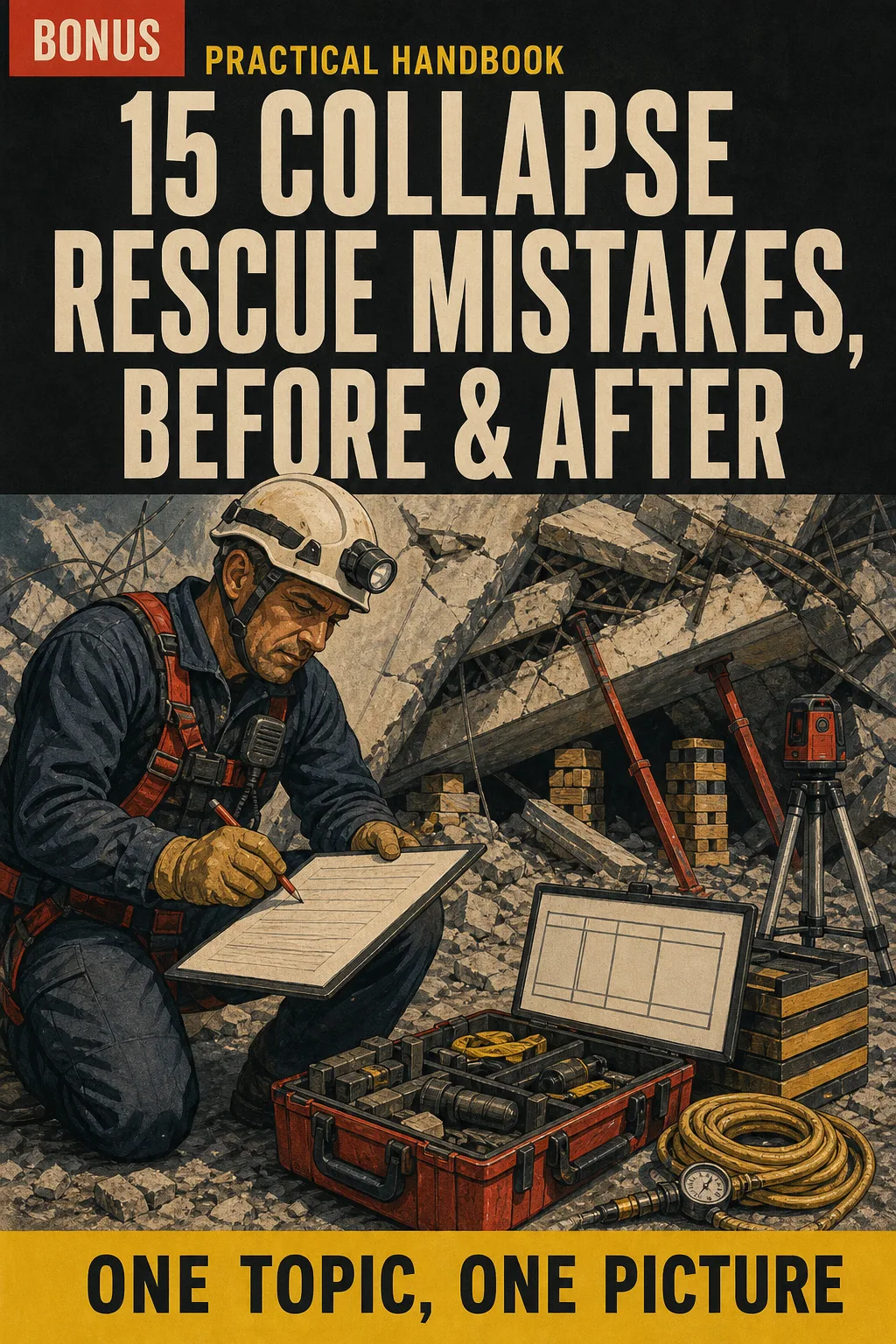
Plus: 2 Free Books

Structural Collapse Exam-Style Questions

BONUS 1: «Structural Collapse Exam-Style Questions»

Value on its own: US$ 17.90

Exam-style questions chapter by chapter, each answer explained, so you find your weak spots before the written test.

15 Collapse Rescue Mistakes, Before & After

BONUS 2: «15 Collapse Rescue Mistakes, Before & After»

Value on its own: US$ 14.90

The most frequent mistakes in size-up, cribbing and shoring, each one drawn wrong and right, to review the night before.

Structural Collapse Rescue Illustrated with 2 Free Books

  • Structural Collapse Rescue Illustrated: 65 illustrated pagesUS$ 63
  • BONUS 1: Structural Collapse Exam-Style QuestionsUS$ 17.90
  • BONUS 2: 15 Collapse Rescue Mistakes, Before & AfterUS$ 14.90
  • High-resolution PDF to printIncluded
Total value US$ 95.80
YOUR PRICE:
US$ 27
You save US$ 68.80
YES, I WANT STRUCTURAL COLLAPSE RESCUE ILLUSTRATED FOR US$ 27

📄 This is a digital PDF book sent to your email: nothing is printed or shipped.

Secure purchaseEncrypted payment30-day guarantee

PDF by email: We email you Structural Collapse Rescue Illustrated as a PDF, together with the two free books. It's a single payment: no installments, no extra charges.

Who This Book Is For

You're in the Collapse Technician class

You're in the Collapse Technician class

Each class topic has its own drawn page, so after a 24-hour shift you review one page instead of a whole chapter.

The written test and the practical are close

The written test and the practical are close

The numbers to know, the shore selection chart and the exam-style questions put everything in order, so you walk in knowing where each thing goes.

You run the team's collapse drills

You run the team's collapse drills

Print one page per drill: the raker, the box crib or the search X, with the numbers already on it, so the crew sees exactly what you're explaining.

Everything You Get Today

US$ 95.80US$ 27
YES, I WANT STRUCTURAL COLLAPSE RESCUE ILLUSTRATED FOR US$ 27

📄 This is a digital PDF book sent to your email: nothing is printed or shipped.

30DAYS
GUARANTEE

30-Day Guarantee

Try Structural Collapse Rescue Illustrated for 30 days, bonus books included.

We refund everything if the file won't open, if the book isn't what you see here, if you were charged twice or if the email doesn't arrive. Just email us.

You pay once. No subscriptions.

Frequently Asked Questions

Is it for me if I'm a veteran firefighter who's new to collapse rescue?

Yes. It doesn't explain the fire service from zero: it starts where your experience ends, with how buildings fall, where the voids form and how each shore is built.

Where does the content come from?

It follows the structural collapse job performance requirements in NFPA 1006 (2021 edition), the FEMA US&R Structural Collapse Technician materials and the USACE US&R Shoring Operations Guide. Shores, markings and load estimates use the FEMA/USACE methods taught nationwide, not one state's rules. If your academy tests to a different edition, the index lets you check each topic against your course binder.

Is it official material?

No. It's an independent illustrated study book. It isn't published or endorsed by NFPA, FEMA, USACE, Pro Board, IFSAC or any state academy, and it doesn't give you a certificate or training hours: your certification comes from your academy's course and exams.

Does it replace the course or hands-on training?

No. It's for review alongside your class and your hours on the pile. Loads and measurements must be checked against your course materials, and the patient packaging pages are study concepts only: always follow your local medical protocols and medical direction.

Are the practice questions the ones on the exam?

No. They're written for this book, chapter by chapter, with each answer explained, so you can find your weak spots. They aren't official exam questions.

When and how do I get it?

The book and the 2 bonus books come as a PDF by email, to the address you enter at checkout.

Do I have to pay every month?

No. It's a one-time payment.

Can I have it on paper?

Yes. The PDF is printable: print the whole book or just the pages you want to keep at the station.

How does the refund work?

You have 30 days. We refund everything if the file won't open, if the book isn't what you see on this page, if you were charged twice or if the email doesn't arrive: just email us.

Before You Close This Page

No more rereading the manual without it sticking.

The search X, the raker, the box crib: you see them drawn and you're set.

You walk into the written test and the practical knowing where everything is.

Drawings make studying faster.

The book is right below.

One-time payment: US$ 27 · Guarantee: 30 days · PDF by email

YES, I WANT STRUCTURAL COLLAPSE RESCUE ILLUSTRATED FOR US$ 27

📄 This is a digital PDF book sent to your email: nothing is printed or shipped.